
Free Online Research Papers
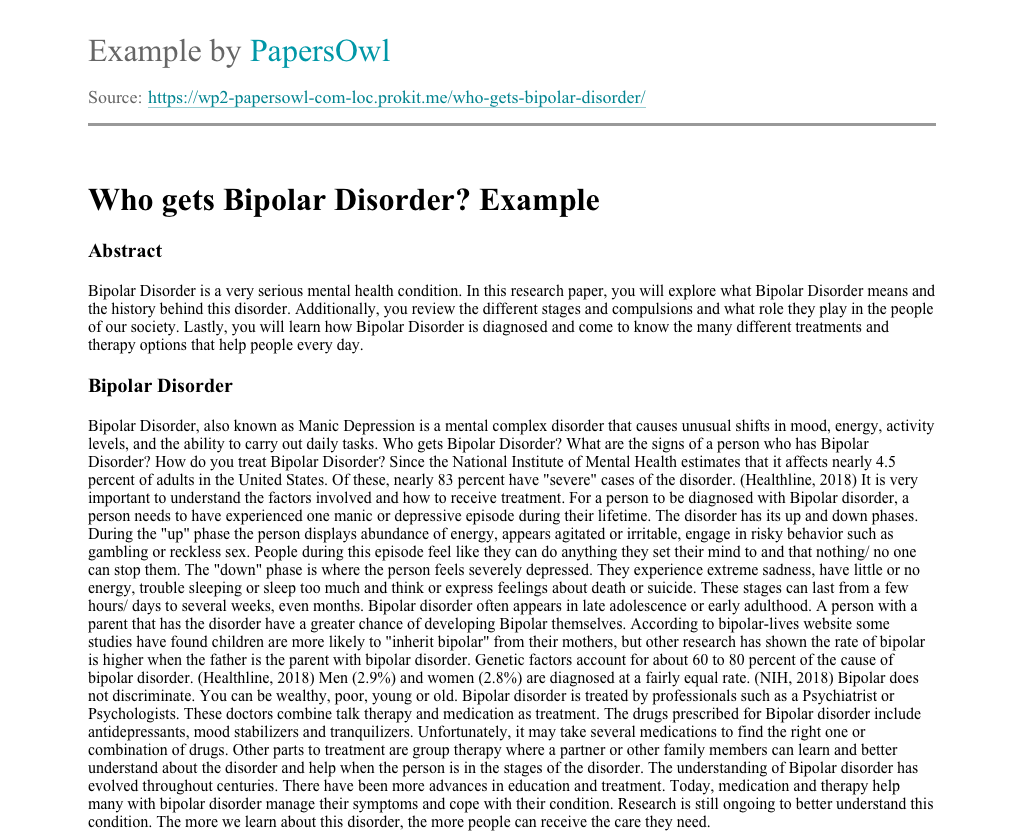
Bipolar disorder, also known as manic-depressive, is a mental disorder. Symptoms of bipolar disorder include extreme highs and extreme lows with periods of normal mood in between. Manic symptoms are being extremely active, talkative, distractible, unlimited hopes with no follow through, aggression, hostility, and violence · It accounted for a $ billion dollar loss in productivity during the ’s in the United States (Soreff ). This paper hopes to expand your knowledge on the key characteristics of depressive disorders with a specific emphasis on bipolar disorder BIOPOLAR DISORDER RESEARCH PAPER • Manic episode: a person who is overly joyful or overexcited. • Depressive episode: a person who is extremely sad or hopeless state. • Mixed episode: a person who has both manic and depression. • During a mood episode a person may also become irritated and
Works Cited
Samples Bipolar Disorder can be a very scary thing for people to go through. You can go from being extremely “happy” to really upset within seconds, which is due to the serotonin levels in your brain. Bipolar disorder causes people to have mood swings, which most of the time have nothing to do with anything going on in their lives · It accounted for a $ billion dollar loss in productivity during the ’s in the United States (Soreff ). This paper hopes to expand your knowledge on the key characteristics of depressive disorders with a specific emphasis on bipolar disorder BIOPOLAR DISORDER RESEARCH PAPER • Manic episode: a person who is overly joyful or overexcited. • Depressive episode: a person who is extremely sad or hopeless state. • Mixed episode: a person who has both manic and depression. • During a mood episode a person may also become irritated and

BIOPOLAR DISORDER RESEARCH PAPER
· Bipolar disorder is a mental disorder that is characterized by extreme mood changes that range from mania to depression. Risk factors include lifestyle, genetics, environment, drug and alcohol abuse, and major life changes such as Bipolar disorder, also known as manic-depressive, is a mental disorder. Symptoms of bipolar disorder include extreme highs and extreme lows with periods of normal mood in between. Manic symptoms are being extremely active, talkative, distractible, unlimited hopes with no follow through, aggression, hostility, and violence Bipolar spectrum disorders are a major public health problem, with estimates of lifetime prevalence in the general population of the United States at percent, 1 with a range from to percent. 2 Bipolar disorder is also associated with significant mortality risk, with approximately 25 percent of patients attempting suicide and 11 percent of patients completing. Author: Donald M Hilty, Martin H Leamon, Russell F Lim, Rosemary H Kelly, Robert E Hales

Prevalence and incidence
· Bipolar disorder is a mental disorder that is characterized by extreme mood changes that range from mania to depression. Risk factors include lifestyle, genetics, environment, drug and alcohol abuse, and major life changes such as Bipolar disorder, also known as manic-depressive illness, and affects the brain and causes shifts in a person's mood and ability to function the exact cause of bipolar disorder is unknown but several factors may be involved, such as biological differences, some seem to have physical changes in their brain, neurotransmitters seem to play a significant role in bipolar disorder, bi BIOPOLAR DISORDER RESEARCH PAPER • Manic episode: a person who is overly joyful or overexcited. • Depressive episode: a person who is extremely sad or hopeless state. • Mixed episode: a person who has both manic and depression. • During a mood episode a person may also become irritated and
Introduction
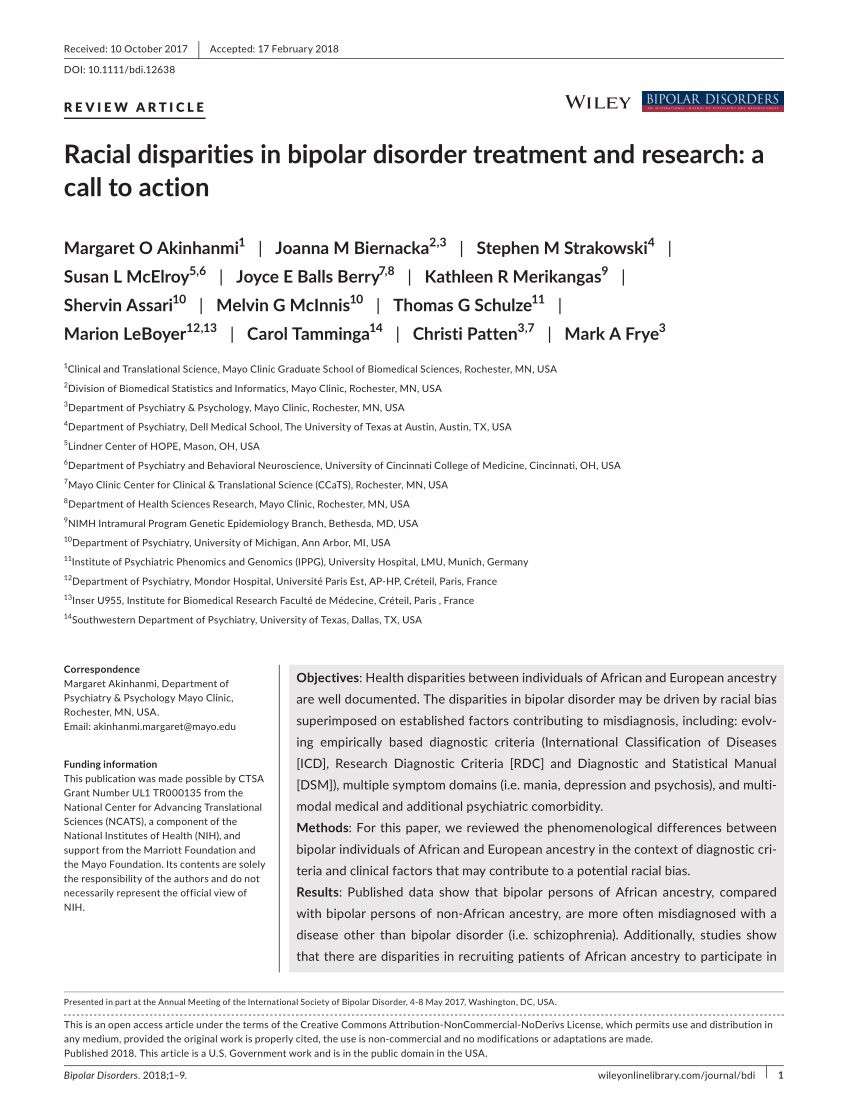
Bipolar disorder, also known as manic-depressive, is a mental disorder. Symptoms of bipolar disorder include extreme highs and extreme lows with periods of normal mood in between. Manic symptoms are being extremely active, talkative, distractible, unlimited hopes with no follow through, aggression, hostility, and violence Bipolar Disorder is a mental illness that has many effects on the human body and mind. Known as manic-depressive disorder, bipolar disorder is most commonly found in young adults, and in some cases, children as well (Gallagher, , 35). Statistics show that bipolar disorder affects about four million people in the United States, and is becoming Bipolar spectrum disorders are a major public health problem, with estimates of lifetime prevalence in the general population of the United States at percent, 1 with a range from to percent. 2 Bipolar disorder is also associated with significant mortality risk, with approximately 25 percent of patients attempting suicide and 11 percent of patients completing. Author: Donald M Hilty, Martin H Leamon, Russell F Lim, Rosemary H Kelly, Robert E Hales

No comments:
Post a Comment